Allein zu SEINER Ehre
Allein zu Seiner Ehre
Es ist etwas zutiefst Falsches am menschlichen Herzen, dass es selbst nach der Erlösung noch einen Teil der Ehre für sich beanspruchen will. Wir mögen von Gnade sprechen, von Barmherzigkeit singen und unsere Abhängigkeit von Gott bekennen, doch hinter diesen Worten verbirgt sich oft ein stilles Verlangen, gesehen, bestätigt und in Erinnerung behalten zu werden. Das ist kein kleiner Makel. Es ist die älteste Krankheit des Menschen. Seit Eden ist dieser Instinkt derselbe geblieben. Wir wollen Gottes Gaben, ohne dass Gottes Ehre im Mittelpunkt steht.
Die Schrift verhandelt nicht mit diesem Instinkt. Sie konfrontiert ihn.
Der Zweck Gottes war nie zwischen ihm selbst und dem Menschen geteilt. Von Anfang bis Ende spricht die Bibel mit einer Stimme. „Meine Ehre werde ich keinem anderen geben“ (Jesaja 42,8). Diese Aussage allein zerstört jedes System, das menschliche Leistungen auch nur annähernd in den Mittelpunkt der Erlösung stellt.
Das Evangelium existiert nicht, um den Ruf des Menschen zu verbessern. Es existiert, um Gottes Ehre wiederherzustellen.
Wenn wir von Erlösung sprechen, stellt die Schrift dies niemals als Partnerschaft dar. Es ist nicht so, dass Gott seinen Teil tut, während der Mensch den Rest erledigt. Es ist nicht so, dass die Gnade die Erlösung ermöglicht, während der menschliche Wille sie wirksam macht. Es ist Gott, der entschlossen handelt, wo der Mensch hilflos war. „Die Erlösung gehört dem Herrn“ (Psalm 3,8). Dieser Satz lässt keinen Raum für geteilte Verdienste.
Deshalb stellt die Schrift Gottes Herrlichkeit in den Mittelpunkt aller Wahrheit. Jeder theologische Irrtum lässt sich auf eine einzige Verschiebung zurückführen. Der Mittelpunkt verlagert sich von Gott zum Menschen. Wenn das geschieht, beginnt die Lehre sich zu verbiegen. Was einst fest stand, wird flexibel. Die Gewissheit beruht nicht mehr auf Gottes Verheißung, sondern auf der menschlichen Verfassung. Die Anbetung wird geringer, weil Gott nicht mehr als bedeutend angesehen wird. Und der Stolz wächst still, nicht laut, bis der Mensch beginnt, sich an die Stelle zu setzen, die nur Gott zusteht.
Der Kern des Evangeliums ist nicht, dass der Mensch Gott gefunden hat. Es ist, dass Gott den Menschen gesucht hat. „Es gibt keinen, der Gott sucht“ (Römer 3,11). Dieser Vers beseitigt jede Prahlerei an der Wurzel. Wenn niemand ihn sucht, kann auch niemand behaupten, ihn durch Weisheit oder Anstrengung entdeckt zu haben. Der Glaube selbst ist keine menschliche Errungenschaft, sondern eine Gabe, die aus Barmherzigkeit entsteht. Epheser 2,8-9 macht dies unausweichlich, damit sich niemand rühmen kann.
Deshalb spricht sich die Schrift so entschieden gegen das Rühmen in etwas anderem als dem Herrn aus. „Wer sich rühmt, der rühme sich des Herrn“ (1. Korinther 1,31). Paulus sagt nicht, man solle sich vorsichtig rühmen. Er sagt, man solle sich nur dort rühmen. Jede andere Form des Rühmens ist Diebstahl.
Selbst unsere guten Werke werden von dieser Wahrheit bewahrt. Die Bibel leugnet sie nicht. Sie ordnet sie richtig ein. „Wir sind sein Werk, geschaffen in Christus Jesus zu guten Werken“ Epheser 2,10. Die Werke folgen der Erlösung. Sie schaffen sie nicht. Und selbst dann existieren sie, damit Gott gepriesen wird, nicht damit der Gläubige bewundert wird.
Wenn das christliche Leben sich auf Sichtbarkeit, Erfolg, Einfluss oder Anerkennung konzentriert, entfernt es sich langsam von seinem wahren Zweck. Der Dienst wird zur Leistung. Gehorsam wird zu Imagepflege. Dienst wird zu Selbstdarstellung. Nichts davon erscheint auf den ersten Blick böse. Aber es ersetzt Ehrfurcht durch Relevanz.
Unsere Vorfahren im Glauben fürchteten dies zutiefst. Sie lehrten, dass die Seele darauf trainiert werden muss, vor allem eine Frage zu stellen. Wer erhält die Ehre? Nicht wer profitiert. Nicht wer wächst. Nicht wer sich ermutigt fühlt. Sondern wer erhöht wird.
Diese Frage deckt viel auf. Wenn Gehorsam uns unseren Ruf kostet, gehorchen wir dann immer noch? Wenn die Wahrheit Ablehnung bringt, sprechen wir dann immer noch? Wenn Treue keinen Applaus bringt, halten wir dann immer noch durch? Diese Momente zeigen, ob Gott wirklich unser Ziel oder nur unser Mittel ist.
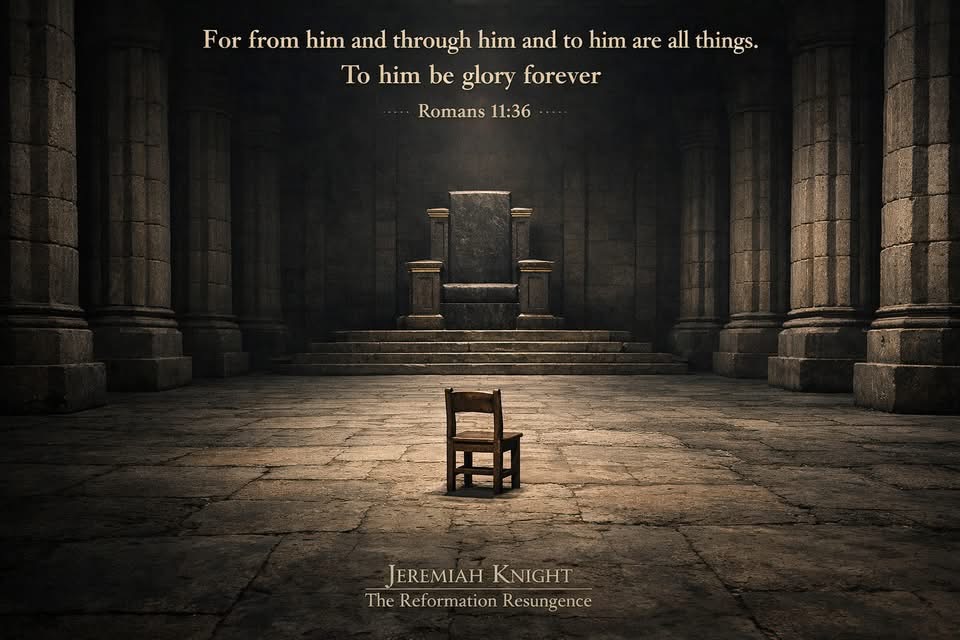
Die Schrift zeigt uns, dass Gottes Herrlichkeit nicht von unserem Wohl getrennt ist. Sie ist dessen Quelle. „Denn von ihm und durch ihn und zu ihm sind alle Dinge. Ihm sei Ehre in Ewigkeit!“ Römer 11,36. Dieser Vers ist nicht nur eine theologische Schlussfolgerung. Er definiert die Realität selbst. Alles beginnt in Gott, bewegt sich durch Gott und endet in Gott.
Sogar Leiden passt hier hinein. Der Gläubige leidet nicht sinnlos. Prüfungen nehmen uns das Vertrauen in uns selbst und zwingen das Herz, dort zu ruhen, wo es schon immer hätte ruhen sollen. Wenn der Trost schwindet, wird die Herrlichkeit deutlicher. Wenn das Selbst zusammenbricht, tritt Christus in den Vordergrund. „Damit die Bewährung eures Glaubens zu Lob, Herrlichkeit und Ehre führt, wenn Jesus Christus offenbart wird“ (1. Petrus 1,7).
Deshalb kann es im christlichen Leben nicht um Selbstverwirklichung gehen. Diese Sprache mag spirituell klingen, aber sie ist hohl. Die Seele wurde nicht geschaffen, um sich selbst zu verwirklichen. Sie wurde geschaffen, um Gott zu schauen. Wahre Freude kommt nicht davon, dass man nach innen schaut. Sie kommt davon, dass man nach oben schaut.
Wenn Gottes Herrlichkeit im Mittelpunkt steht, findet alles andere seinen Platz. Gewissheit beruht nicht auf Leistung, sondern auf Verheißung. Die Anbetung vertieft sich, weil es nicht mehr um Emotionen geht, sondern um Wahrheit. Gehorsam wird zu Freiheit statt zu einer Last, weil er aus Liebe statt aus Angst entsteht.
Die Tragödie vieler moderner Christen ist nicht Unmoral. Es ist Selbstbezogenheit, die sich in religiöser Sprache kleidet. Gott wird gedankt, aber der Mensch wird gefeiert. Gnade wird erwähnt, aber Anstrengung wird gelobt. Von Christus wird gesprochen, aber das Rampenlicht bleibt still auf dem Individuum.
Die Schrift lässt diese Vermischung niemals zu.
Das Kreuz selbst steht als endgültiges Argument. Auf Golgatha trägt der Mensch nichts außer Sünde bei. Christus trägt alles. Die Gerechtigkeit ist befriedigt. Der Zorn ist erschöpft. Die Erlösung ist vollbracht. „Es ist vollbracht“ (Johannes 19,30). Diese Worte beseitigen jeden verbleibenden menschlichen Stolz. Es gibt nichts mehr hinzuzufügen.
Nur für Gottes Ehre zu leben ist nicht hart. Es ist befreiend. Es befreit die Seele von dem erschöpfenden Bedürfnis, wichtig zu sein. Wenn Gott verherrlicht wird, kann der Gläubige ruhen. Das Leben dreht sich nicht mehr darum, seinen Wert zu beweisen. Der Wert ist bereits in Christus gesichert.
Deshalb kann der Christ still arbeiten, geduldig leiden und treu dienen, auch wenn er nicht gesehen wird. Das Publikum, das zählt, ist nicht menschlich. „Ob ihr nun esst oder trinkt oder was ihr auch tut, tut alles zur Ehre Gottes“ (1. Korinther 10,31). Dieser Auftrag reicht in jeden Bereich des Lebens hinein. Nicht nur in den Gottesdienst. Nicht nur in den Dienst. In alles.
Wenn Gott allein die Ehre zuteilwird, wird die Gemeinde demütig. Leiter werden zu Dienern. Erfolg verliert seinen Einfluss. Misserfolg verliert seinen Schrecken. Christus steht im Mittelpunkt, wo er hingehört.
Und wenn das geschieht, applaudiert die Welt vielleicht nicht, aber der Himmel freut sich.
Das ist genug.
Wer Ohren hat zu hören, der höre.
Jeremiah Knight
Die Wiederbelebung der Reformation
This entry was posted in Fundstücke, Gemeinsam Bibellesen, Jesaja, Römer and tagged 1. Korinther 1, 1. Korinther 10, 1. Petrus 1, Epheser 2, Jesaja 42, Johannes 19, Psalm 3, Römer 11 by Jule with 1 commentComments
Schreibe einen Kommentar
Du musst angemeldet sein, um einen Kommentar abzugeben.
For His Glory Alone
There is something deeply wrong with the human heart that even after salvation it still wants a share of the credit. We may speak of grace, sing of mercy, and confess dependence on God, yet beneath those words there often remains a quiet desire to be seen, affirmed, and remembered. This is not a small flaw. It is the oldest disease of man. From Eden onward the instinct has been the same. We want God’s gifts without God’s glory being central.
Scripture does not negotiate with this instinct. It confronts it.
The purpose of God has never been divided between Himself and man. From beginning to end the Bible speaks with one voice. “My glory I will not give to another” Isaiah 42:8. That statement alone dismantles every system that places human achievement anywhere near the centre of redemption.
The gospel does not exist to improve man’s reputation. It exists to restore God’s honour.
When we speak of salvation, Scripture never frames it as a partnership. It is not God doing His part while man completes the rest. It is not grace making salvation possible while human will makes it effective. It is God acting decisively where man was helpless. “Salvation belongs to the Lord” Psalm 3:8. That sentence leaves no room for shared credit.
This is why Scripture places God’s glory at the heart of all truth. Every theological error can be traced back to one shift. The centre moves from God to man. When that happens, doctrine begins to bend. What once stood firm becomes flexible. Assurance no longer rests on God’s promise but on human condition. Worship becomes smaller because God is no longer seen as weighty. And pride grows quietly, not loudly, until man begins to stand where only God belongs.
The heart of the gospel is not that man found God. It is that God sought man. “There is none who seeks after God” Romans 3:11. That verse removes all boasting at the root. If no one seeks Him, then no one can claim to have discovered Him by wisdom or effort. Faith itself is not a human achievement but a gift born from mercy. Ephesians 2:8 to 9 makes this unavoidable so that no one may boast.
This is why Scripture speaks so strongly against glorying in anything other than the Lord. “Let him who boasts boast in the Lord” 1 Corinthians 1:31. Paul does not say boast carefully. He says boast only there. Every other form of boasting is theft.
Even our good works are guarded by this truth. The Bible does not deny them. It places them properly. “We are His workmanship created in Christ Jesus for good works” Ephesians 2:10. The works follow salvation. They do not create it. And even then, they exist so that God may be praised, not the believer admired.
When the Christian life becomes focused on visibility, success, influence, or recognition, it slowly drifts from its true purpose. Ministry becomes performance. Obedience becomes image management. Service becomes self-expression. None of this appears evil at first. But it replaces reverence with relevance.
Our forefathers in faith feared this deeply. They taught that the soul must be trained to ask one question above all others. Who receives the glory. Not who benefits. Not who grows. Not who feels encouraged. But who is exalted.
This question exposes much. When obedience costs us reputation, do we still obey. When truth brings rejection, do we still speak. When faithfulness brings no applause, do we still endure. These moments reveal whether God is truly our aim or merely our means.
Scripture shows us that God’s glory is not separate from our good. It is the source of it. “For from him and through him and to him are all things. To him be glory forever” Romans 11:36. That verse does not merely conclude theology. It defines reality itself. Everything begins in God, moves by God, and ends in God.
Even suffering fits here. The believer does not suffer meaninglessly. Trials strip away self-trust and force the heart to rest where it should have rested all along. When comfort fades, glory becomes clearer. When self-collapses, Christ rises in view. “So that the tested genuineness of your faith may result in praise and glory and honour at the revelation of Jesus Christ” 1 Peter 1:7.
This is why the Christian life cannot be about self-fulfilment. That language may sound spiritual, but it is hollow. The soul was not created to be fulfilled by itself. It was created to behold God. True joy does not come from looking inward. It comes from looking upward.
When God’s glory is central, everything else finds its place. Assurance rests not in performance but in promise. Worship deepens because it is no longer about emotion but about truth. Obedience becomes freedom rather than burden because it flows from love rather than fear.
The tragedy of much modern Christianity is not immorality. It is self-centeredness dressed in religious language. God is thanked, but man is celebrated. Grace is mentioned, but effort is praised. Christ is spoken of, but the spotlight quietly remains on the individual.
Scripture never allows this mixture.
The cross itself stands as the final argument. At Calvary man contributes nothing except sin. Christ bears everything. Justice is satisfied. Wrath is exhausted. Redemption is finished. “It is finished” John 19:30. Those words remove all remaining human pride. There is nothing left to add.
To live for God’s glory alone is not harsh. It is liberating. It frees the soul from the exhausting need to matter. When God is glorified, the believer can rest. Life no longer revolves around proving worth. Worth is already secured in Christ.
This is why the Christian can labour quietly, suffer patiently, and serve faithfully even when unseen. The audience that matters is not human. “Whether you eat or drink or whatever you do, do all to the glory of God” 1 Corinthians 10:31. That command reaches into every corner of life. Not only worship services. Not only ministry. Everything.
When God alone receives glory, the church becomes humble. Leaders become servants. Success loses its grip. Failure loses its terror. Christ stands at the centre where He belongs.
And when that happens, the world may not applaud, but heaven is pleased.
That is enough.
He, who has ears to hear, let him hear.
Jeremiah Knight
The Reformation Resurgence