Miriam – kleine Füße, mutiger Glauben
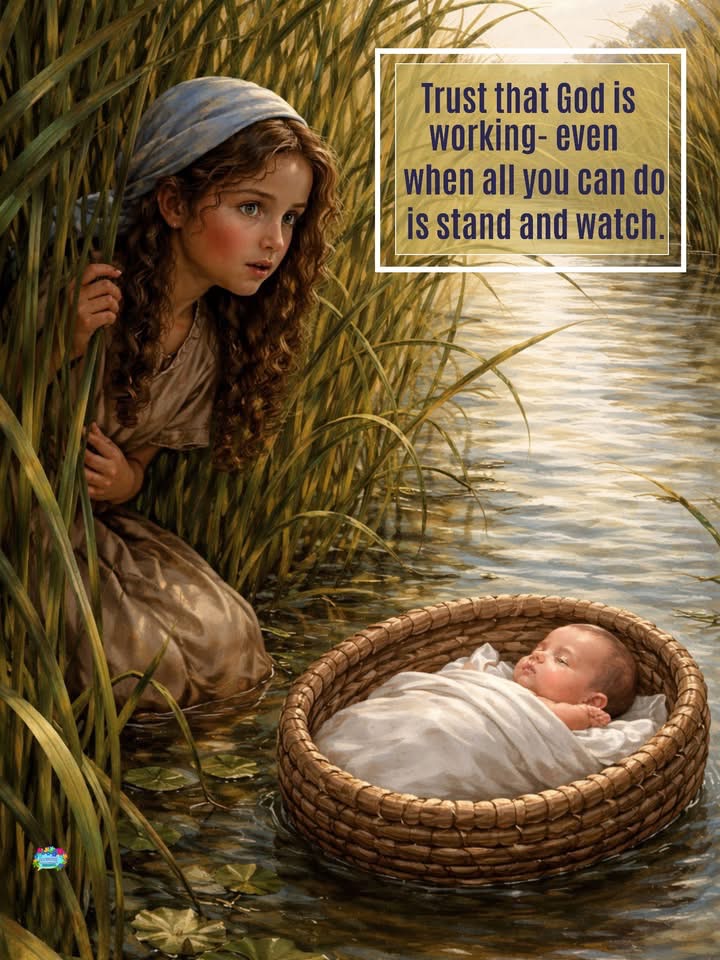
KLEINE FÜSSE, MUTIGER GLAUBE
Wenn wir in der Bibel von Mut reden, denken wir oft an Krieger, Propheten oder Könige. Aber heute lädt uns die Heilige Schrift ein, Mut mit den Augen eines Kindes zu sehen – eines jungen Mädchens namens Miriam. Sie hatte kein Schwert, keine Macht, keinen Schutz. Trotzdem halfen ihr Gehorsam und ihr stiller Mut, das Schicksal einer Nation zu verändern.
Dies ist eine Geschichte über Glauben unter Bedrohung, Gehorsam unter Angst und Mut, wenn niemand applaudiert.
Mut beginnt zu Hause
Mirjams Mut begann nicht am Fluss, sondern mit den Anweisungen ihrer Mutter.
In Exodus 2 wird berichtet, dass der Pharao befohlen hatte, alle hebräischen Jungen in den Nil zu werfen. In diesem Klima der Angst bereitete Jochebed, eine gläubige Mutter, einen Weidenkorb vor, machte ihn wasserdicht und vertraute ihr Baby Gott an.
Dann gab sie ihrer Tochter eine Aufgabe, die kein Kind tragen sollte.
Miriam trug nicht nur einen Korb –
sie trug:
das Leben ihres Bruders,
die Hoffnung ihrer Mutter
und den Glauben ihrer Familie.
Wahrer Mut beginnt oft damit, dass Kinder schon früh lernen, auf Gott zu vertrauen.
Miriam lernte, dass Gehorsam gegenüber Gott manchmal bedeutet, den Eltern zu gehorchen, auch wenn es beängstigend ist.
Mut ist Gehorsam trotz Angst
Stell dir die Szene vor.
Ägyptische Soldaten patrouillierten am Fluss.
Der Nil war gefährlich, voller Strömungen und Raubtiere.
Ein einziger Schrei des Babys hätte sie alle auffliegen lassen können.
Miriam wusste um das Risiko. Sie war alt genug, um die Gefahr zu verstehen – und doch jung genug, um tiefe Angst zu empfinden.
Trotzdem gehorchte sie.
Mut ist nicht die Abwesenheit von Angst, sondern der Glaube, der trotz Angst handelt.
Viele von uns warten darauf, sich mutig zu fühlen, bevor wir handeln, aber Miriam lehrt uns:
Gehorsam kommt zuerst – Mut folgt.
Gott bittet uns oft, Dinge zu tun, die sich unsicher, unangenehm oder jenseits unserer Kräfte anfühlen – aber Gehorsam öffnet die Tür für göttliches Eingreifen.
Mut, der beobachtet und wartet
Miriam verließ den Korb nicht und rannte nicht weg.
In Exodus 2,4 heißt es:
„Seine Schwester blieb in einiger Entfernung stehen, um zu sehen, was mit ihm geschehen würde.“
Das ist stiller Mut – der Mut, zu bleiben, zu beobachten, zu warten.
Sie geriet nicht in Panik.
Sie mischte sich nicht voreilig ein.
Sie vertraute auf Gott und blieb gleichzeitig wachsam.
Manchmal schreit der Glaube nicht.
Manchmal steht der Glaube still in der Ferne und vertraut darauf, dass Gott am Werk ist, auch wenn das Ergebnis ungewiss ist.
Diese Art von Mut erfordert Geduld – und Geduld ist oft schwieriger als Handeln.
Mut, der zur richtigen Zeit spricht
Als die Tochter des Pharaos das Baby entdeckte, tat Miriam etwas Erstaunliches.
Eine Sklavin.
Ein hebräisches Kind.
Sie sprach mutig zu den ägyptischen Königen.
„Soll ich eine Amme aus den hebräischen Frauen holen?“
Das war keine unüberlegte Äußerung.
Es war Weisheit, geleitet von Gott.
Miriam lehrt uns, dass Mut nicht nur bedeutet, zu wissen, wann man handeln muss, sondern auch, wann man sprechen muss.
Gott gab ihr in diesem Moment die richtige Einsicht – und ihr Mut führte dazu, dass Moses wieder mit seiner Mutter vereint wurde.
Gott nutzt kleinen Mut für große Befreiung
Miriam teilte nicht das Rote Meer.
Sie konfrontierte den Pharao nicht.
Sie führte noch kein Volk an.
Aber ihr Gehorsam setzte Ereignisse in Gang, die schließlich dazu führten, dass
Israel aus der Sklaverei befreit wurde,
Gottes Macht offenbart wurde
und die Heilsgeschichte geprägt wurde.
Unterschätze niemals, was Gott durch kleine Taten des Gehorsams bewirken kann.
Der Mut eines Kindes, das sich in Gottes Hände begab, wurde Teil von Gottes Erlösungsplan.
Miriam erinnert uns daran, dass:
Gott den Glauben der Kinder sieht,
Gott stillen Gehorsam ehrt,
Gott Mut nutzt, der klein erscheint, aber voll und ganz auf ihn vertraut.
Einige von euch tragen heute Körbe voller Unsicherheit mit sich herum.
Einige von euch beobachten und warten an Flüssen der Angst.
Einige von euch werden gebeten, zu gehorchen, obwohl das Ergebnis unklar ist.
Seid getrost.
Der Gott, der über Mose im Schilf wachte,
ist derselbe Gott, der heute über euren Gehorsam wacht.
Seid treu in den kleinen Dingen.
Seid mutig im Gehorsam.
Und vertraut darauf, dass Gott am Werk ist –
auch wenn ihr nur dastehen und zusehen könnt.
Comments
Schreibe einen Kommentar
Du musst angemeldet sein, um einen Kommentar abzugeben.
SMALL FEET, BRAVE FAITH
When we speak of courage in the Bible, we often think of warriors, prophets, or kings. But today, Scripture invites us to look at courage through the eyes of a child—a young girl named Miriam. She had no sword, no authority, no protection. Yet her obedience and quiet bravery helped change the destiny of a nation.
This is a story about faith under threat, obedience under fear, and courage when no one is applauding.
Courage Begins in the Home
Miriam’s courage did not begin at the river; it began in her mother’s instructions.
Exodus 2 tells us that Pharaoh had commanded all Hebrew baby boys to be thrown into the Nile. In this climate of terror, Jochebed, a mother of faith, prepared a reed basket, waterproofed it, and entrusted her baby to God.
Then she entrusted her daughter with a task no child should have to bear.
Miriam was not merely carrying a basket—
She was carrying:
her brother’s life,
her mother’s hope,
and her family’s faith.
True courage often starts when children are taught to trust God early.
Miriam learned that obedience to God sometimes means obeying parents even when it is frightening.
Courage Is Obedience Despite Fear
Imagine the scene.
Egyptian soldiers patrolled the river.
The Nile was dangerous, filled with currents and predators.
One cry from the baby could expose them all.
Miriam knew the risk. She was old enough to understand danger—yet young enough to feel fear deeply.
Still, she obeyed.
Courage is not the absence of fear; it is faith that moves despite fear.
Many of us wait to feel brave before we act, but Miriam teaches us that:
Obedience comes first—courage follows.
God often asks us to do things that feel unsafe, uncomfortable, or beyond our strength—but obedience opens the door for divine intervention.
Courage That Watches and Waits
Miriam did not leave the basket and run.
Exodus 2:4 says,
“His sister stood at a distance to know what would be done to him.”
This is quiet courage—the courage to stay, to watch, to wait.
She did not panic.
She did not interfere prematurely.
She trusted God while staying alert.
Sometimes faith does not shout.
Sometimes faith stands quietly at a distance, believing that God is at work even when outcomes are unknown.
This kind of courage requires patience—and patience is often harder than action.
Courage That Speaks at the Right Time
When Pharaoh’s daughter discovered the baby, Miriam did something astonishing.
A slave girl.
A Hebrew child.
Speaking boldly to Egyptian royalty.
“Shall I go and call a nurse from the Hebrew women?”
This was not reckless speech.
It was wisdom guided by God.
Miriam teaches us that courage is not only knowing when to act, but also when to speak.
God gave her discernment in the moment—and her courage reunited Moses with his own mother.
God Uses Small Courage for Great Deliverance
Miriam did not part the Red Sea.
She did not confront Pharaoh.
She did not lead a nation—yet.
But her obedience set in motion events that would eventually:
deliver Israel from slavery,
reveal God’s power,
and shape salvation history.
Never underestimate what God can do through small acts of obedience.
A child’s courage placed in God’s hands became part of God’s redemptive plan.
Miriam reminds us that:
God sees the faith of children,
God honors quiet obedience,
God uses courage that looks small but trusts Him fully.
Some of you today are carrying baskets of uncertainty.
Some are watching and waiting by rivers of fear.
Some are being asked to obey when the outcome is unclear.
Take heart.
The God who watched over Moses in the reeds
is the same God who watches over your obedience today.
Be faithful in the small.
Be courageous in obedience.
And trust that God is working—
even when all you can do is stand and watch.
(Note: Generated with assistance from ChatGPT)