Manasse veränderte sein Herz
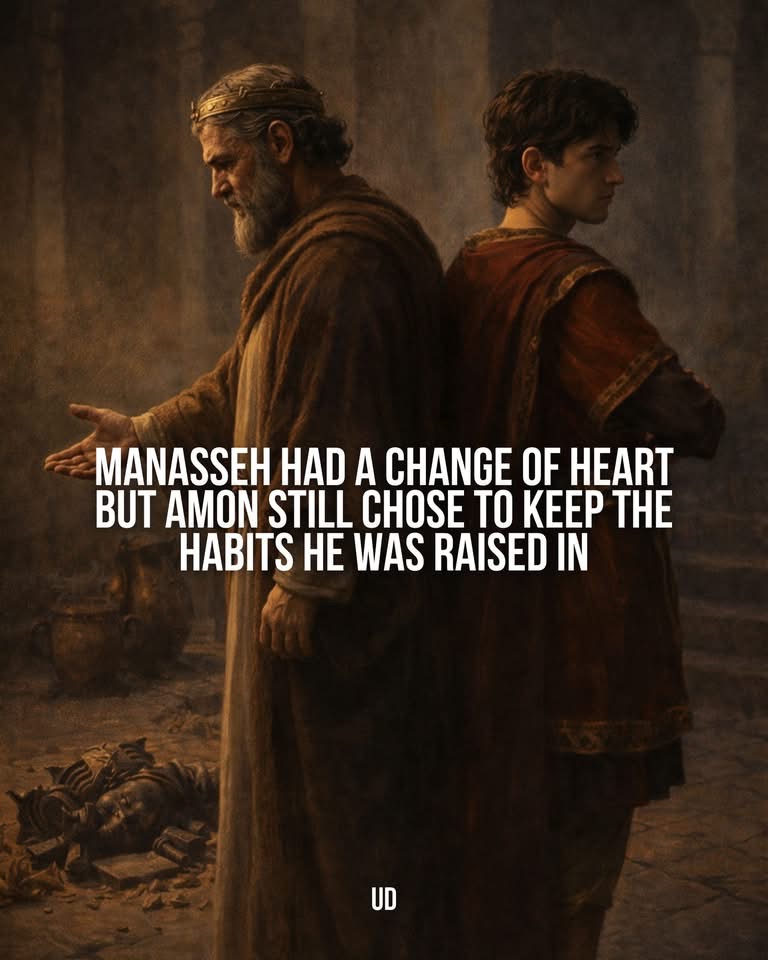
Die Herrschaft Manasses gilt als eines der dunkelsten Kapitel in der Geschichte Judas.
Jahrzehntelang führte Manasse das Volk in Götzendienst,
Gewalt und geistige Verwirrung.
Er baute Höhenheiligtümer wieder auf, praktizierte Wahrsagerei,
stellte Götzenbilder in den Tempel des Herrn
und vergoss unschuldiges Blut, bis Jerusalem
von einem Ende zum anderen davon erfüllt war (2. Könige 21).
Dies waren keine privaten Sünden. Es waren prägende Taten,
die die Vorstellung einer ganzen Generation davon formten, wie Macht,
Gottesdienst und Königtum aussahen.
Später berichtet uns die Schrift jedoch, dass Manasse Buße tat.
Nach den Chroniken demütigte ihn das Exil, und in seiner Not
suchte er den Herrn, demütigte sich zutiefst und wurde
nach Jerusalem zurückgebracht (2. Chronik 33).
Seine Reue war echt. Gott erhörte ihn.
Aber Reue, wie echt sie auch sein mag, löscht die Prägung nicht aus.
Manasse regierte fünfundfünfzig Jahre lang.
Sein Sohn Amon wuchs nicht unter dem Einfluss der Reue auf,
sondern unter der jahrzehntelangen götzendienerischen Herrschaft seines Vaters.
Als Manasse sich wieder Gott zuwandte,
war Amon bereits durch ein Haus
und einen Hof geprägt, in denen Bosheit zur Normalität geworden war.
Als Amon den Thron bestieg, berichtet uns die Schrift
„Er tat, was dem Herrn missfiel, wie sein Vater Manasse … und er demütigte sich nicht vor dem Herrn, wie sein Vater Manasse sich gedemütigt hatte“ (2. Chronik 33,22–23).
Es ist traurig, dass Amon von der Umkehr seines Vaters wusste.
Aber er zog es nicht in Betracht, diesem Beispiel zu folgen.
Dies ist eine der ernüchterndsten Unterscheidungen der Schrift:
Umkehr kann nicht vererbt werden.
Manasses Versöhnung mit Gott
galt nicht automatisch auch für seinen Sohn.
Denn Vergebung ist etwas Persönliches.
Demut ist eine persönliche Entscheidung.
Amon entschied sich stattdessen dafür, in den Mustern zu verharren,
die ihm vertraut waren und ihm Macht verliehen.
Die Folgen waren unmittelbar.
Amons Herrschaft dauerte nur zwei Jahre.
Seine Diener verschworen sich gegen ihn
und töteten ihn in seinem eigenen Haus (2. Könige 21,23).
Die Gewalt, die einst vom Thron herabfloss,
richtete sich nun gegen ihn selbst.
Was Manasse normalisiert hatte,
erbte Amon und konnte nicht überleben.
Nun handelt es sich hierbei nicht nur um politische Instabilität. Es ist eine theologische Warnung.
Sünde, die zu lange unangesprochen bleibt, verankert sich
in Familien, Kulturen und Erwartungen.
Selbst wenn schließlich Reue kommt,
kann sie nicht immer rückgängig machen, was bereits weitergegeben wurde.
Gnade vergibt dem Sünder, aber die Zeit prägt weiterhin den Sohn.
Aber Gott sei Dank endet die Schrift hier nicht.
Amons Tod ebnete den Weg für einen Kindkönig, Josia.
Aus den Trümmern des Versagens einer ganzen Generation
erhob Gott einen Herrscher, der ihn schon in jungen Jahren suchte.
Und obwohl dies den angerichteten Schaden nicht mindert,
vergrößert es doch die Gnade, die immer noch eingreift.
Aber selbst Josia konnte trotz all seiner Treue
das Urteil, das schon lange vor ihm in Gang gesetzt worden war,
nicht mehr rückgängig machen.
Die Geschichte treibt uns voran, zu unserer größeren Hoffnung.
Bei den Königen von Juda kam die Umkehr zu spät, und die Macht reichte nicht aus,
um zu heilen, was die Sünde tief geprägt hatte.
In Christus wartet Gott nicht darauf, dass Umkehr
aus einer gebrochenen Linie hervorgeht; er tritt in die Geschichte ein, um eine neue zu schaffen.
Denn Jesus korrigiert nicht nur die Sünden der Väter.
Er durchbricht den Kreislauf an seiner Wurzel.
Manasse tat Buße, und Gott vergab ihm.
Amon weigerte sich, und die Gewalt verschlang ihn.
Juda wartete auf einen König, dessen Gerechtigkeit
nicht zu spät, sondern genau zum richtigen Zeitpunkt kommen würde.
Und während dieses Wartens bereitet der Herr bereits
den Weg für den König der Könige.
This entry was posted in 2. Könige, Fundstücke, Gemeinsam Bibellesen and tagged 2. Chronika 33, 2. Könige 21, Manasse, Umkehr by Jule with 1 commentComments
Schreibe einen Kommentar
Du musst angemeldet sein, um einen Kommentar abzugeben.
The reign of Manasseh stands as one of the darkest chapters in Judah’s history.
For decades, Manasseh led the nation into idolatry,
violence, and spiritual confusion.
He rebuilt high places, practiced divination,
placed idols within the temple of the LORD,
and shed innocent blood until Jerusalem
was filled from one end to the other (2 Kings 21).
These were not private sins. They were formative acts,
shaping a generation’s imagination of what power,
worship, and kingship looked like.
But Scripture later tells us that Manasseh repented.
According to Chronicles, exile humbled him, and in his distress
he sought the LORD, humbled himself greatly, and was restored
to Jerusalem (2 Chronicles 33).
His repentance was real. God heard him.
But repentance, however genuine, does not erase formation.
Manasseh reigned for fifty-five years.
His son Amon grew up not under the influence of repentance,
but under decades of his father’s idolatrous rule.
By the time Manasseh turned back to God,
Amon had already been shaped by a household
and a court where wickedness had been normalized.
When Amon ascended the throne, Scripture tells us,
“He did evil in the sight of the LORD, as Manasseh his father had done… and he did not humble himself before the LORD, as Manasseh his father had humbled himself” (2 Chronicles 33:22–23).
It’s saddening that Amon knew of his father’s repentance.
But he did not consider deciding to follow it.
This is one of Scripture’s most sobering distinctions,
repentance cannot be inherited.
Manasseh’s reconciliation with God
did not automatically extend to his son.
Because forgiveness is personal.
Humility is a personal choice.
Amon chose instead to remain in the patterns
that felt familiar and powerful.
And the consequences were immediate.
Amon’s reign lasted only two years.
His servants conspired against him
and killed him in his own house (2 Kings 21:23).
The violence that had once flowed downward
from the throne now turned inward upon it.
What Manasseh had normalized,
Amon inherited, and could not survive.
Now this is not merely political instability. It is a theological warning.
Sin, left unaddressed for too long, embeds itself
in families, cultures, and expectations.
Even when repentance finally comes,
it does not always undo what has already been passed on.
Grace forgives the sinner, but time still shapes the son.
But thank God, Scripture does not end here.
Amon’s death cleared the way for a child-king, Josiah.
From the wreckage of generational failure,
God raised a ruler who would seek Him while still young.
And although this does not minimize the damage done,
it magnifies the mercy that still intervenes.
But even Josiah, for all his faithfulness,
could not finally reverse the judgment
already set in motion long before him.
The story presses us forward, to our greater hope.
In the kings of Judah, repentance came late and power failed
to heal what sin had deeply formed.
In Christ, God does not wait for repentance to emerge
from broken lineage; He enters history to create a new one.
Because Jesus does not merely correct the sins of fathers.
He breaks the cycle right at its root.
Manasseh repented, and God forgave him.
Amon refused, and violence consumed him.
Judah waited, for a King whose righteousness
would not arrive too late but just exactly at the right time.
And in that waiting, the Lord is already
paving the way for the King of Kings.