Gott tötet einen Propheten wegen unvollständigem Gehorsam
Gott tötet einen Propheten wegen unvollständigem Gehorsam
Während der Herrschaft von König Jerobeam war Israel zum Götzendienst übergegangen. Jerobeam errichtete in Bethel einen goldenen Altar, um das Volk daran zu hindern, nach Jerusalem zurückzukehren, um dort Gott anzubeten. Als Reaktion darauf schickte Gott einen Mann Gottes aus Juda – einen Propheten mit einem klaren, direkten Auftrag.
Der Prophet konfrontierte Jerobeam öffentlich, während der König am Altar stand. Er verkündete Gottes Urteil: Der Altar würde zerbrechen, und ein zukünftiger König namens Josia würde ihn entweihen. Sofort erfüllte sich das Zeichen – der Altar zerbrach, und Jerobeams Hand verdorrte, als er versuchte, den Propheten zu packen. Erst nachdem der König ihn angefleht hatte, betete der Prophet, und Jerobeams Hand wurde wiederhergestellt.
Gott hatte dem Propheten strenge Anweisungen gegeben:
Iss kein Brot
Trink kein Wasser.
Komm nicht auf demselben Weg zurück, auf dem du gekommen bist.
Der Befehl war klar. Die Mission war heilig.
Als der Prophet ging, hörte ein alter Prophet, der in Bethel lebte, was passiert war und verfolgte ihn. Als er den Mann Gottes ruhen sah, lud er ihn zu sich nach Hause zum Essen ein. Der Mann Gottes lehnte ab und erklärte Gottes Befehl.
Aber der alte Prophet log.
Er behauptete, ein Engel habe zu ihm gesprochen und gesagt, der Mann Gottes solle zurückkehren und essen. Der Prophet vertraute dieser Stimme mehr als dem ursprünglichen Befehl und kehrte um. Er aß. Er trank.
Während sie am Tisch saßen, kam das wahre Wort des Herrn – nicht zu dem gehorsamen Propheten, sondern zu dem lügenden. Das Urteil wurde verkündet: Weil der Mann Gottes dem Befehl des Herrn nicht gehorcht hatte, würde er nicht in seinem Stammgrab beigesetzt werden.
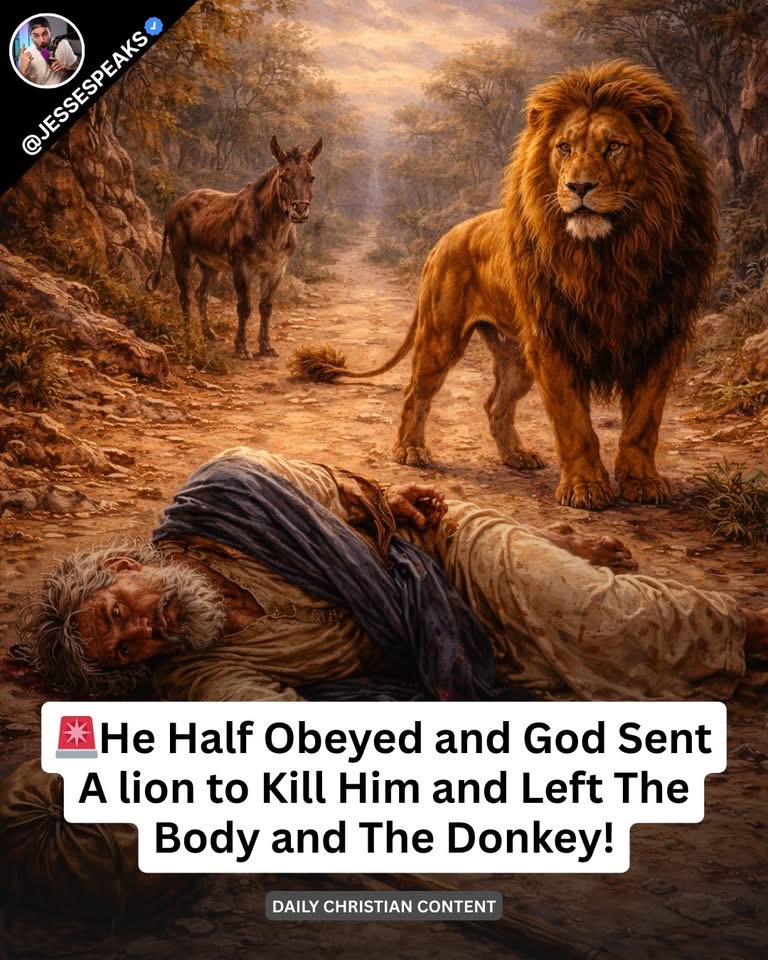
Auf seiner Heimreise begegnete ihm ein Löwe auf der Straße und tötete ihn. Seltsamerweise fraß der Löwe weder die Leiche noch griff er den Esel an – er stand neben ihnen. Der Tod war kein Zufall. Er war präzise.
Als der alte Prophet davon hörte, holte er die Leiche zurück, trauerte um ihn und begrub ihn in seinem eigenen Grab, womit er die Wahrheit von Gottes Wort anerkannte.
Diese Geschichte ist beunruhigend, weil der Mann Gottes vieles richtig gemacht hat. Er sprach mutig. Er widerstand der Versuchung. Er gehorchte – fast.
Aber teilweiser Gehorsam erwies sich als unzureichend.
Die Lektion ist hart: Gottes Gebote können nicht neu interpretiert werden, auch nicht von anderen spirituellen Stimmen. Verzögerter, angepasster oder kompromissbereiter Gehorsam ist immer noch Ungehorsam. Beinahe-Gehorsam ist kein Gehorsam.
This entry was posted in 1. Könige, Fundstücke, Gemeinsam Bibellesen and tagged 1. Könige 13, Der alte Prophet by Jule with 1 commentComments
Schreibe einen Kommentar
Du musst angemeldet sein, um einen Kommentar abzugeben.
God Kills a Prophet for Partial Obedience
During the reign of King Jeroboam, Israel had turned toward idolatry. Jeroboam set up a golden altar at Bethel to prevent the people from returning to Jerusalem to worship. In response, God sent a man of God from Judah—a prophet with a clear, direct assignment.
The prophet confronted Jeroboam publicly while the king stood at the altar. He declared God’s judgment: the altar would split apart, and a future king named Josiah would desecrate it. Immediately, the sign was fulfilled—the altar cracked, and Jeroboam’s hand withered when he tried to seize the prophet. Only after the king begged did the prophet pray, and Jeroboam’s hand was restored.
God had given the prophet strict instructions:
Do not eat bread
Do not drink water
Do not return by the same way you came
The command was clear. The mission was holy.
As the prophet left, an old prophet living in Bethel heard what had happened and pursued him. When he found the man of God resting, he invited him home for food. The man of God refused, explaining God’s command.
But the old prophet lied.
He claimed an angel had spoken to him, saying the man of God should return and eat. Trusting another voice over the original command, the prophet went back. He ate. He drank.
While they sat at the table, the true word of the Lord came—not to the obedient prophet, but to the lying one. Judgment was pronounced: because the man of God had disobeyed the command of the Lord, he would not be buried in his ancestral tomb.
On his journey home, a lion met him on the road and killed him. Strangely, the lion did not eat the body or attack the donkey—it stood beside them. The death was not random. It was precise.
When the old prophet heard, he retrieved the body, mourned him, and buried him in his own grave, acknowledging the truth of God’s word.
This story is unsettling because the man of God did many things right. He spoke boldly. He resisted temptation. He obeyed—almost.
But partial obedience proved insufficient.
The lesson is severe: God’s commands are not open to reinterpretation, even by other spiritual voices. Obedience delayed, adjusted, or compromised is still disobedience. Near obedience is not obedience.
#PartialObedience #FearOfTheLord
#GodsWord