Das Gleichnis vom Senfkorn
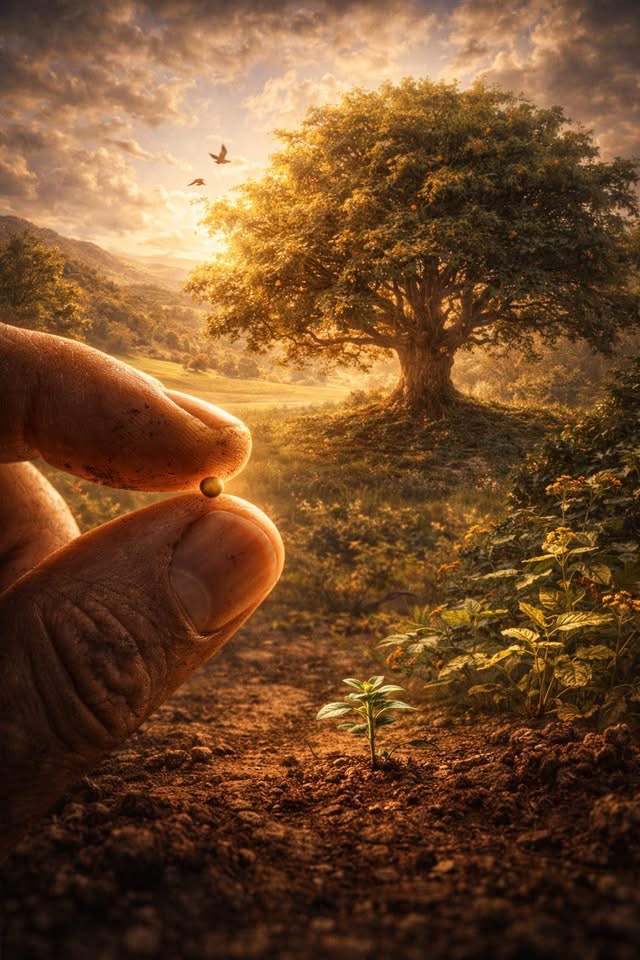
Als Jesus fragt: „Womit können wir das Reich Gottes vergleichen, oder mit welchem Gleichnis sollen wir es beschreiben?“ (Markus 4,30, ESV), sucht er nicht nach Worten. Er stellt Annahmen in Frage. Die Menschen erwarteten, dass das Reich Gottes mit Größe, Macht, Sichtbarkeit und Dominanz kommen würde. Jesus wählt das Gegenteil. „Es ist wie ein Senfkorn, das, wenn es auf den Boden gesät wird, das kleinste aller Samenkörner auf der Erde ist“ (Markus 4,31, ESV). Das Reich Gottes kündigt sich nicht mit Spektakel an. Es kommt still, fast unscheinbar.
Das Senfkorn war sprichwörtlich klein. Leicht zu übersehen. Leicht zu ignorieren. Nichts an ihm deutete auf Einfluss oder Beständigkeit hin. Und genau das ist der Punkt. Das Reich Gottes beginnt nicht auf eine Weise, die menschliche Maßstäbe beeindruckt. Es beginnt verborgen. Innerlich. Unterschätzt. Gott fühlt sich durch kleine Anfänge nicht bedroht, weil er nicht von Äußerlichkeiten abhängig ist.
Dann sagt Jesus etwas Radikales. „Wenn es aber gesät ist, wächst es und wird größer als alle anderen Gartenpflanzen“ (Markus 4,32, ESV). Beachten Sie die Veränderung. Die Kraft liegt nicht in der Pflanztechnik. Sie liegt im Samen selbst. Einmal gepflanzt, ist Wachstum unvermeidlich. Der Samen muss nicht kämpfen, um zu werden, was er ist. Leben entfaltet sich ganz natürlich aus Leben.
Hier ist die Erkenntnis, die viele übersehen. Der Senfkorn wächst nicht zu etwas anderem heran. Er wird zu dem, was er bereits ist. Der Samen trägt die gesamte Zukunft des Baumes in sich. Genauso ist das Reich Gottes nicht etwas, zu dem man durch Anstrengung heranwächst. Es ist etwas, das in dir liegt und durch das Leben wächst.
Jesus geht noch weiter. Der Senfbaum wird so groß, „dass die Vögel des Himmels in seinem Schatten nisten können“ (Markus 4,32, ESV). Das ist keine blumige Sprache. Vögel stehen in der Heiligen Schrift oft für Außenseiter, Nationen und diejenigen, die profitieren, ohne etwas beizutragen. Das Reich Gottes wächst nicht nur für sich selbst. Es wächst, um ein Ort der Ruhe für andere zu werden. Was klein beginnt, wird zu einem Zufluchtsort.
Das schenkt Gläubigen, die sich unbedeutend fühlen, tiefen Frieden. Dein Glaube mag sich klein anfühlen. Dein Verständnis begrenzt. Dein Einfluss unsichtbar. Aber das Reich Gottes wird nicht daran gemessen, wie es beginnt. Es wird daran gemessen, was aus ihm wird. Und was aus ihm wird, wird durch den Samen bestimmt, nicht durch die Unruhe des Bodens.
Markus fügt dann eine wichtige Anmerkung hinzu. „Mit vielen solchen Gleichnissen redete er zu ihnen, wie sie es hören konnten“ (Markus 4,33, ESV). Jesus überwältigt niemanden. Er begegnet den Menschen dort, wo sie sind. Die Offenbarung erfolgt in Gnade. Und wenn er mit seinen Jüngern allein ist, „erklärte er ihnen alles“ (Markus 4,34, ESV). Vertrautheit schafft Klarheit. Nähe schafft Verständnis.
Durch das vollendete Werk Jesu Christi wird dieses Gleichnis zu einer tiefen Gewissheit. Das Reich Gottes ist bereits in dir gepflanzt. Du wartest nicht darauf, dass es kommt. Du lebst in seiner Wachstumsphase. Kleine Anfänge bedrohen Gottes Absichten nicht. Sie erfüllen sie.
Die Anwendung ist einfach und befreiend. Hör auf, das zu verachten, was sich klein anfühlt. Hör auf, dein Leben an sichtbaren Ergebnissen zu messen. Vertraue auf den Samen, den Gott in dich gepflanzt hat. Wachstum findet statt, auch wenn du es nicht sehen kannst. Und eines Tages wird das, was sich unbedeutend anfühlte, zu einem Ort der Ruhe für andere werden.
Das Reich Gottes eilt nicht.
Es wächst.
This entry was posted in Fundstücke, Gemeinsam Bibellesen, Markus and tagged das Gleichnis vom Senfkorn, Markus 4 by Jule with 1 commentComments
Schreibe einen Kommentar
Du musst angemeldet sein, um einen Kommentar abzugeben.
When Jesus asks, “With what can we compare the kingdom of God, or what parable shall we use for it?” (Mark 4:30, ESV), He is not searching for language. He is confronting assumptions. People expected the kingdom of God to arrive with size, force, visibility, and dominance. Jesus chooses the opposite. “It is like a grain of mustard seed, which, when sown on the ground, is the smallest of all the seeds on earth” (Mark 4:31, ESV). The kingdom does not announce itself with spectacle. It arrives quietly, almost unimpressively.
The mustard seed was proverbially small. Easy to overlook. Easy to dismiss. Nothing about it suggested influence or permanence. And that is the point. The kingdom of God does not begin in ways that impress human measurement. It begins hidden. Internal. Undervalued. God is not threatened by small beginnings because He is not dependent on appearances.
Then Jesus says something radical. “Yet when it is sown it grows up and becomes larger than all the garden plants” (Mark 4:32, ESV). Notice the shift. The power is not in the planting technique. It is in the seed itself. Once planted, growth is inevitable. The seed does not struggle to become what it is. Life unfolds naturally from life.
Here is the revelation many miss. The mustard seed does not grow into something different. It becomes what it already is. The seed carries within itself the full future of the tree. In the same way, the kingdom of God is not something you grow into by effort. It is something placed within you that grows by life.
Jesus goes further. The mustard plant becomes so large “that the birds of the air can make nests in its shade” (Mark 4:32, ESV). This is not decorative language. Birds in Scripture often represent outsiders, nations, and those who benefit without contributing. The kingdom does not grow just for itself. It grows to become a place of rest for others. What begins small becomes a refuge.
This brings deep peace to believers who feel insignificant. Your faith may feel small. Your understanding limited. Your impact unseen. But the kingdom of God is not measured by how it starts. It is measured by what it becomes. And what it becomes is determined by the seed, not by the soil’s anxiety.
Mark then adds an important note. “With many such parables he spoke the word to them, as they were able to hear it” (Mark 4:33, ESV). Jesus does not overwhelm. He meets people where they are. Revelation is paced by grace. And when He is alone with His disciples, “he explained everything” (Mark 4:34, ESV). Intimacy brings clarity. Proximity produces understanding.
Through the finished work of Jesus Christ, this parable becomes deeply assuring. The kingdom has already been planted in you. You are not waiting for it to arrive. You are living in its growth stage. Small beginnings do not threaten God’s purposes. They fulfill them.
The application is simple and freeing. Stop despising what feels small. Stop measuring your life by visible outcomes. Trust the seed God has planted in you. Growth is happening even when you cannot see it. And one day, what felt insignificant will become a place of rest for others.
The kingdom of God does not rush.
It grows.