Gottes Weigerung, ihre Opfergaben anzunehmen
Maleachi 1:10 NIV
„Ach, würde doch einer von euch die Tempeltüren schließen, damit ihr keine nutzlosen Feuer auf meinem Altar anzündet! Ich bin nicht zufrieden mit euch“, sagt der allmächtige Herr, „und ich werde keine Opfergaben aus euren Händen annehmen.
Maleachi 1:10 stammt aus einer Zeit, als der Gottesdienst in Israel noch aktiv war, aber an Bedeutung verloren hatte.
Der Tempel war wieder aufgebaut worden,
der Altar funktionierte,
und Opfer wurden weiterhin
als Teil des täglichen religiösen Lebens dargebracht.
Äußerlich schien das Volk gläubig zu sein.
In Wirklichkeit war sein Gottesdienst
nachlässig und hohl geworden.
Der Prophet Maleachi spricht
sowohl das Volk als auch die Priester an
und weist den Priestern, denen die Aufgabe übertragen worden war,
die Heiligkeit des Namens Gottes zu bewahren,
eine besondere Verantwortung zu.
Anstatt makellose Tiere zu opfern,
wie es das Gesetz vorschrieb,
brachten sie blinde, lahme und kranke Tiere
zum Altar.
Was Gott in der Thora klar verboten hatte,
wurde durch Gewohnheit und Bequemlichkeit
langsam akzeptabel.
Das war keine Frage der Unwissenheit,
sondern der nachlassenden Ehrfurcht.
Gottes Vorwurf deckt
den Kern des Problems auf.
Er fragt: „Wenn ich ein Vater bin, wo bleibt dann meine Ehre?
Und wenn ich ein Herr bin, wo bleibt dann meine Furcht?“
Das Problem war nicht das Fehlen
von Anbetung, sondern das Fehlen von Ehrfurcht.
Die Leute machten mit ihren religiösen
Praktiken weiter, während sie Gott so behandelten,
als wäre er ganz normal und anspruchslos.
Ihre Opfergaben kosteten sie wenig,
und ihre Anbetung spiegelte
diese mangelnde Ernsthaftigkeit wider.
In diesem Zusammenhang wirkt Maleachi 1,10
eher wie ein ernüchterndes Urteil
als wie ein emotionaler Ausbruch.
Wenn Gott sagt, er wünschte, jemand würde
die Tempeltüren schließen, damit
kein Feuer auf seinem Altar umsonst entzündet würde,
lehnt er nicht die Anbetung an sich ab.
Er lehnt eine Anbetung ab, die leer,
mechanisch und respektlos ist.
Das Feuer auf dem Altar, das
Hingabe und Treue zum Bund symbolisieren sollte,
war bedeutungslos geworden, weil
es von Gehorsam und Ehre losgelöst war.
Gottes Weigerung, ihre Opfergaben anzunehmen,
hat seine Wurzeln in der Bundesbeziehung.
Unter dem mosaischen Bund
waren Opfer niemals dazu gedacht,
automatisch zu funktionieren.
Sie waren Ausdruck von Loyalität,
Reue und Ehrfurcht.
Eine unwürdige Opfergabe darzubringen,
bedeutete, eine geringe Meinung von Gott zu haben.
Der Herr macht dies deutlich, indem er
ihre Handlungen mit der Art und Weise vergleicht,
wie sie einen menschlichen Statthalter behandeln würden,
den sie niemals auf die gleiche Weise entehren würden.
Daher zeigt Gottes Aussage, dass er lieber
die Tempeltüren geschlossen sehen würde, als
solche Opfergaben anzunehmen,
seine Sorge um die Integrität der Anbetung.
Schweigen wäre Ritualen vorzuziehen,
die das Volk dazu erzogen, seine Heiligkeit auf die leichte Schulter zu nehmen.
Maleachi 1,10 deckt eine traurige Wahrheit auf:
Israel hatte nicht aufgehört zu beten,
aber sie hatten aufgehört,
den Gott zu ehren, den sie angeblich anbeteten.
Vergessen wir nicht, heute in unserem Beten wachsam zu sein.
Mögen wir keine unpassenden Opfergaben
vor unseren heiligen Gott bringen.
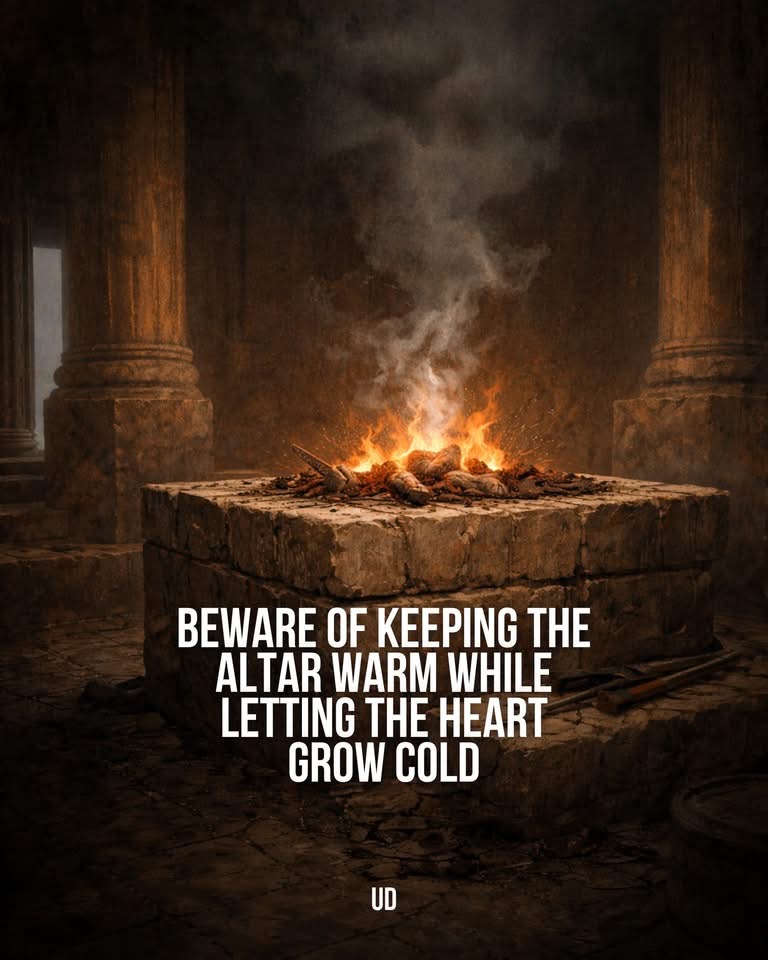
Denn Gott will keinen Altar,
der von einem kalten Herzen warm gehalten wird.
Comments
Schreibe einen Kommentar
Du musst angemeldet sein, um einen Kommentar abzugeben.
Malachi 1:10 NIV
“Oh, that one of you would shut the temple doors, so that you would not light useless fires on my altar! I am not pleased with you,” says the Lord Almighty, “and I will accept no offering from your hands.
Malachi 1:10 comes from a period when Israel’s worship was still active but had lost its weight.
The temple had been rebuilt,
the altar was functioning,
and sacrifices were continuing
as part of daily religious life.
Outwardly, the people appeared faithful.
In reality, their worship had
become careless and hollow.
The prophet Malachi addresses
both the people and the priests,
placing particular responsibility
on the priests who were entrusted
with guarding the holiness of God’s name.
Instead of offering unblemished
animals as required by the law,
they were bringing blind, lame,
and sick sacrifices to the altar.
What God had clearly forbidden
in the Torah had slowly become
acceptable through habit and convenience.
This was not a matter of ignorance
but of diminished reverence.
God’s accusation exposes
the heart of the problem.
He asks, “If I am a Father, where is my honor?
And if I am a Master, where is my fear?”
The issue was not the absence
of worship but the absence of awe.
The people continued their religious
practices while treating God as though
He was ordinary and undemanding.
Their offerings cost them little,
and their worship reflected
that lack of seriousness.
Within this context, Malachi 1:10
functions as a sobering verdict
rather than an emotional outburst.
When God says He wishes someone
would shut the temple doors so that
no fire would be kindled on His altar in vain,
He is not rejecting worship itself.
He is rejecting worship that is empty,
mechanical, and disrespectful.
The fire on the altar, which was meant
to symbolize devotion and covenant faithfulness,
had become meaningless because
it was disconnected from obedience and honor.
God’s refusal to accept their offerings
is rooted in the covenant relationship.
Under the Mosaic covenant,
sacrifices were never meant
to function automatically.
They were expressions of loyalty,
repentance, and reverence.
To bring an unworthy offering
was to communicate a low view of God.
The Lord makes this clear by comparing
their actions to how they would treat
a human governor, whom they would
never dare to dishonor in the same way.
Therefore, God’s statement that He would
rather the temple doors be closed than
receive such offerings reveals
His concern for the integrity of worship.
Silence would be preferable to rituals
that trained the people to take His holiness lightly.
Malachi 1:10 exposes a tragic reality,
Israel had not stopped worshiping,
but they had stopped honoring
the God they claimed to worship.
Let us not forget to be vigilant in our worship today.
May we not bring unacceptable offerings
before our holy God.
For God wouldn’t want
an altar kept warm by a cold heart.