Josia – die Wurzeln des Glaubens bereits in früher Kindheit gelegt
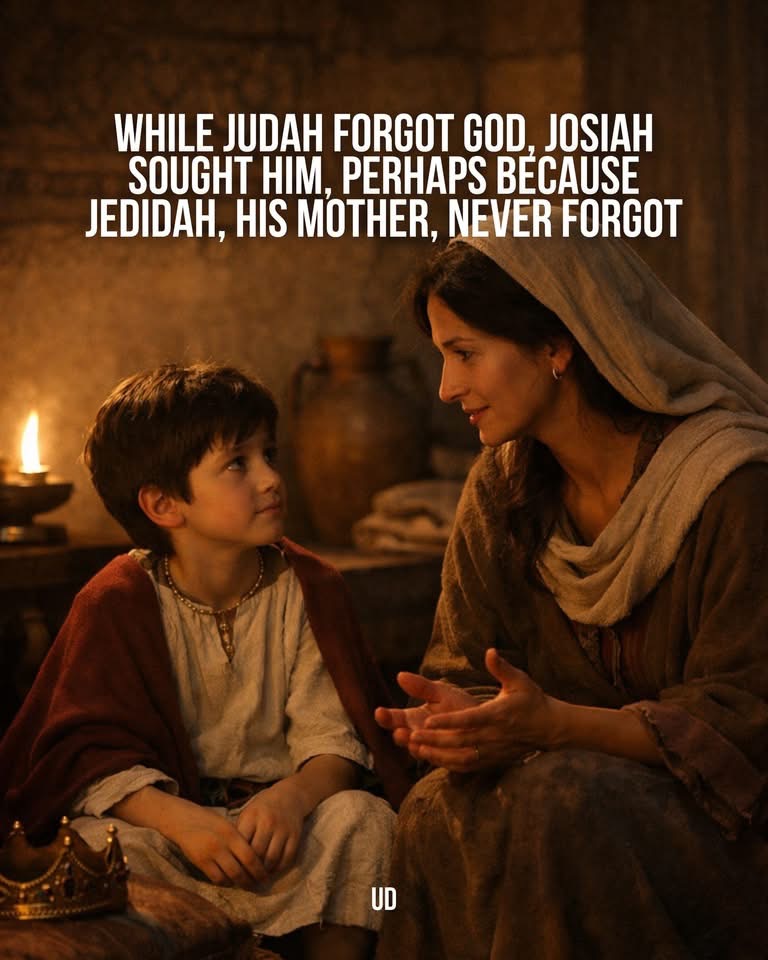
Josia bestieg im Alter von acht Jahren den Thron von Juda.
Ein Knabenkönig aus Juda, der kein Vermächtnis des Glaubens geerbt hatte.
Sein Großvater Manasse regierte mehr als
ein halbes Jahrhundert lang und führte Juda in eine so tiefe Götzenverehrung,
dass die Schrift sagt, er habe Jerusalem mit unschuldigem Blut erfüllt (2. Könige 21,16).
Sein Vater Amon folgte dem gleichen Muster
und seine Herrschaft endete gewaltsam nach nur zwei Jahren als König.
Geistlich wuchs Josia in einem Haus auf, in dem
die Furcht vor dem Herrn
auf den höchsten Ebenen der Macht aufgegeben worden war.
Und doch berichtet die Schrift etwas Unerwartetes:
„Er tat, was recht war in den Augen des Herrn
und wandelte in allen Wegen seines Vaters David“ (2. Könige 22,2).
Diese Aussage wurde nicht näher erläutert und war für mich eine Frage.
Der Chronist fügt sogar ein wichtiges Detail hinzu, indem er sagt
„Im achten Jahr seiner Herrschaft, als er noch jung war,
begann er, den Gott seines Vaters David zu suchen“
(2. Chronik 34,3).
Es ist wichtig zu beachten, dass diese Suche stattfand
bevor das Buch des Gesetzes im Tempel entdeckt wurde
was geschah, als Josia dessen Restaurierung anordnete.
Wie kam es also, dass ein Kind, das in einem so geistlich verdorbenen Haushalt aufgewachsen war, überhaupt dazu kam, den Herrn zu suchen?
Die Schrift nennt keinen Propheten, der ihn unterwiesen hat.
Sie nennt auch keinen Priester, der sein Gewissen geleitet hat.
Interessanterweise erwähnt die Schrift jedoch
den Namen seiner Mutter, was in ihrer Kultur unkonventionell ist,
da Frauen nicht so viel Bedeutung beigemessen wird,
insbesondere wenn es um politische Angelegenheiten geht.
In 2. Könige 22,1 heißt es, dass Josia der Sohn Jedidas war.
Und wissen Sie was? Ihr Name bedeutet „Geliebte”.
Obwohl der Text nicht sagt, dass Jedida
Josia in der Gesetzgebung unterwies, und wir der Versuchung widerstehen müssen,
über das hinaus zu spekulieren, was die Schrift offenbart,
glaube ich, dass die Verfasser der Bibel immer
bewusst ausgewählt haben, was sie festhalten wollten.
Die Namensgebung für die Mutter dieses jungen Königs war niemals zufällig,
sondern umgibt seine Geschichte mit einem relationalen und moralischen Rahmen.
Er war so jung und hatte kein gutes Vorbild
in seinem Großvater und Vater, die vor ihm regiert hatten.
In einem Palast, der von Götzendienst durchdrungen war, bewahrte Gott
eine Frau, deren Name selbst Zeugnis davon ablegte, dass sie dazugehörte und geliebt wurde.
Auch wenn ihr politische Macht fehlte und ihr Einfluss
gering und eingeschränkt war, lässt uns die Heilige Schrift erkennen,
dass Josia nicht aus einem spirituellen Vakuum hervorgegangen ist.
Sein Glaube begann nicht in den Tempelhöfen, sondern schon früher.
An einem kleineren Ort. An einem unsichtbaren Ort.
Dies entspricht einem breiteren biblischen Muster.
Gott pflegt den Glauben oft schon lange, bevor er öffentlich wird.
Er wirkt durch geflüsterte Erinnerungen,
Teilwahrheiten und zerbrechlichen Gehorsam.
Das Überleben des Bundesglaubens in Israel
wurde selten von Königen aufrechterhalten, sondern häufiger
in Haushalten, Namen, Geschichten
und der stillen Furcht vor dem Herrn bewahrt.
Josias spätere Reaktion auf das wiederentdeckte Gesetz bestätigt dies.
Als die Schriftrolle vorgelesen wurde, zerriss er seine Kleider
und demütigte sich (2. Könige 22,11).
Dies war nicht die Reaktion eines Herzens,
das Gott zum ersten Mal begegnete.
Es war die Reaktion von jemandem,
der ihn bereits fürchtete, und ich glaube,
dass Jedidah, seine Mutter, dabei eine Rolle spielte.
Dennoch hatte Josias Glaube trotz aller Aufrichtigkeit seine Grenzen.
Seine Reformen waren echt, aber das Urteil über Juda wurde nicht aufgehoben.
Sein Gehorsam war aufrichtig, aber er konnte Generationen der Rebellion nicht heilen.
Sein Tod kam plötzlich, und seine Geschichte endete ungelöst.
Die Schrift lässt uns dort warten.
Warten auf einen König, dessen Gerechtigkeit
eine Nation nicht nur reformieren, sondern erlösen würde.
Warten auf einen Sohn, der das Gesetz nicht neu entdecken, sondern erfüllen würde.
Warten auf einen, der nicht einfach von jemandem namens „Geliebter” auferweckt werden würde, sondern der
vom Vater selbst zum „Geliebten” erklärt werden würde.
Josia zeigt uns, dass Gott selbst
Josia zeigt uns, dass Gott den Glauben
selbst in den dunkelsten Umgebungen wecken kann.
Jesus zeigt uns, dass nur Gott selbst
dauerhafte Erlösung bringen kann.
Und zwischen diesen beiden Wahrheiten lehrt uns die Heilige Schrift,
die stillen Anfänge des Glaubens zu ehren, die oft lange
vor einer sichtbaren Erweckung geformt und oft von denen getragen werden, die in der Geschichte kaum Erwähnung finden.
This entry was posted in 2. Könige, Fundstücke, Gemeinsam Bibellesen and tagged Josia, König Josia by Jule with 1 commentComments
Schreibe einen Kommentar
Du musst angemeldet sein, um einen Kommentar abzugeben.
Josiah ascended the throne of Judah at eight years old.
A boy King from Judah who did not inherit a legacy of faith.
His grandfather, Manasseh, reigned for more than
half a century and led Judah into idolatry so deep
that Scripture says he filled Jerusalem with innocent blood (2 Kings 21:16).
His father, Amon, followed the same pattern,
and his reign ended violently after just two years as king.
Spiritually, Josiah grew up in a house where
the fear of the LORD had been abandoned
at the highest levels of power.
And yet, Scripture records something unexpected,
“He did what was right in the eyes of the LORD
and walked in all the way of David his father” (2 Kings 22:2).
This statement was not explained and had been a question for me.
The Chronicler even adds an important detail, saying
“In the eighth year of his reign, while he was still young,
he began to seek the God of David his father”
(2 Chronicles 34:3).
It’s important to note that this seeking occurred
before the Book of the Law was discovered in the temple
which happened when Josiah ordered its restoration.
So how did a child, raised in such a spiritually corrupted household, come to seek the LORD at all?
Scripture never named a prophet who discipled him.
It never identified a priest who guided his conscience.
But interestingly enough, Scripture does record
the name of his mother, something unconventional
in their culture, since women aren’t given that much
importance especially when it comes to political matters.
2 Kings 22:1 says that Josiah was born to Jedidah.
Ang guess what, her name means “beloved.”
Although the text did not say that Jedidah instructed
Josiah in the Law, and we must resist the temptation
to speculate beyond what Scripture reveals,
I believe the biblical authors were always
deliberate in what they preserve.
The naming of this boy king’s mother was never accidental,
it places a relational and moral frame around his story.
He was so young and there was no good example to look at
from his grandfather and father who reigned before him.
In a palace saturated with idolatry, God preserved
a woman whose very name testified to belonging, to being loved.
Even if she lacked political power, and even if her influence
was quiet and constrained, Scripture allowed us to see
that Josiah did not emerge from a spiritual vacuum.
His faith began not in the temple courts, but somewhere earlier.
Somewhere smaller. Somewhere unseen.
This fits a wider biblical pattern.
God often nurtures faith long before it becomes public.
He works through whispered memory,
partial truth, and fragile obedience.
The survival of covenant faith in Israel
was rarely maintained by kings, more often,
it was preserved in households, names, stories,
and quiet fear of the Lord.
Josiah’s later response to the rediscovered Law confirms this.
When the scroll was read, he tore his garments
and humbled himself (2 Kings 22:11).
This was not the reaction of a heart
encountering God for the first time.
It was the response of someone
who already feared Him and I believe
Jedidah, his mother, played a part in it.
But still, Josiah’s faith, for all its sincerity, had limits.
His reforms were real, but judgment on Judah was not reversed.
His obedience was genuine, but it could not heal generations of rebellion.
His death came suddenly, and his story ended unresolved.
Scripture leaves us waiting there.
Waiting for a King whose righteousness
would not merely reform a nation, but redeem it.
Waiting for a Son who would not rediscover the Law, but fulfill it.
Waiting for One who would not simply be raised
by someone called Beloved, but who would be declared
Beloved by the Father Himself.
Josiah shows us that God can awaken faith
even in the darkest environments.
Jesus shows us that only God Himself
can bring lasting salvation.
And between those two truths, Scripture teaches us
to honor the quiet beginnings of faith, often shaped long
before revival is visible, and often carried by those history barely names.