Joseph im Gefängnis
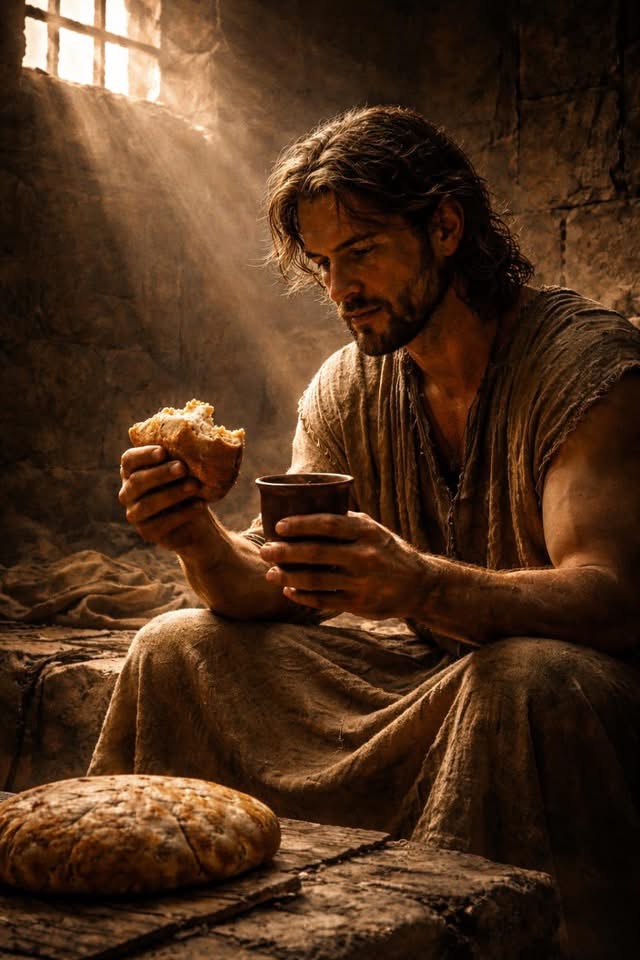
Joseph im Gefängnis wird selten mit Gemeinschaft in Verbindung gebracht, doch seine Geschichte enthält stillschweigend eines der deutlichsten prophetischen Bilder von Brot und Kelch in der gesamten Heiligen Schrift. Wir konzentrieren uns normalerweise auf seine Träume, seine Geduld oder seine Beförderung, aber wir übersehen oft, was Gott offenbart, während Joseph noch in Gefangenschaft ist. Bevor Joseph erhoben wird, bevor er rehabilitiert wird, bevor der Pharao jemals seinen Namen hört, nimmt Joseph an einer Geschichte von gebrochenem Brot und einem ausgegossenen Kelch teil. Und das passiert im Gefängnis.
Joseph wird zu Unrecht eingesperrt. Er ist unschuldig, vergessen und scheinbar von den Verheißungen abgeschnitten, die über sein Leben ausgesprochen wurden. Das ist wichtig. Die Kommunion beginnt nicht an einem Ort des Triumphs. Sie beginnt an einem Ort der Hingabe. Joseph nimmt Brot und Wein nicht zeremoniell zu sich, aber die Symbolik ist unverkennbar. Im Gefängnis begegnet Joseph dem Mundschenk und dem Bäcker. Der eine steht für den Kelch. Der andere steht für das Brot. Beide werden vor ihn gebracht. Beide erzählen ihre Geschichten. Und Joseph steht zwischen ihnen als Deuter des Schicksals.
Der Bäcker und der Mundschenk sind keine zufälligen Figuren. Der Bäcker trägt Brot. Der Mundschenk trägt Wein. Der eine wird gebrochen. Der andere wird wiederhergestellt. Der Bäcker wird verurteilt. Der Mundschenk wird erhoben und zum König zurückgebracht. Dieser Moment wird oft als Lektion über Träume behandelt, aber er ist weit mehr als das. Es ist prophetische Symbolik. Das Brot wird gebrochen. Der Kelch wird ausgegossen. Über Leben und Tod wird entschieden. Und Joseph, der unschuldige Leidende, steht in der Mitte.
Diese Geschichte wird oft als moralische Lektion über Konsequenzen oder als Warnung vor Stolz missverstanden. Aber wenn man sie durch die Brille des Neuen Testaments liest, wird sie zu einer Vorahnung Christi. Joseph wird von seinen Brüdern verraten, für Silber verkauft, fälschlicherweise beschuldigt und unschuldig ins Gefängnis geworfen. Im Gefängnis vermittelt er über das Schicksal von Brot und Kelch. Jesus erfüllt dies vollständig. Verraten von den Seinen. Für Silber verkauft. Unschuldig und doch verurteilt. Und in der Nacht, in der er verraten wird, nimmt er Brot und Kelch und erklärt, dass beide nun von ihm sprechen.
Hier ist die Offenbarung, die alles verändert. Joseph deutet zuerst den Traum des Mundschenks. Der Kelch wird dem König zurückgegeben. Der Kelch bleibt erhalten. Der Bäcker, dessen Brot emporgehoben wird, wird zerbrochen. Dies spiegelt das Kreuz wider. Der Körper Jesu wird zerbrochen. Sein Blut wird angenommen. Die Kommunion erzählt dieselbe Geschichte. Das Brot steht für seinen Körper, der für uns hingegeben wurde. Der Kelch steht für sein Blut, das für uns vergossen wurde. Einer zerbrochen. Einer emporgehoben. Ein Tod. Ein Leben. Joseph verkündet das Evangelium aus einer Gefängniszelle heraus, ohne jemals den Namen Jesu zu kennen.
Das gibt dem Leser Frieden, weil es zeigt, dass die Kommunion keine Belohnung für die Freiheit ist. Sie ist Nahrung in der Gefangenschaft. Gott gibt Joseph Offenbarung, bevor er ihm Beförderung schenkt. Bei der Kommunion geht es nicht darum, zu feiern, dass äußerlich alles vollbracht ist. Es geht darum, sich daran zu erinnern, dass Gott innerlich gegenwärtig ist. Joseph wartet nicht bis zum Palast, um Gottes Absicht zu begegnen. Er begegnet ihr im Gefängnis, durch die Bilder von Brot und Kelch, die auf Christus hinweisen.
Die praktische Anwendung ist echt beruhigend. Wenn du heute das Abendmahl nimmst, sagst du nicht, dass das Leben perfekt ist. Du sagst, dass Christus genug ist. Wenn Joseph in einer Gefängniszelle prophetische Gemeinschaft erleben konnte, dann ist kein Ort, an dem du dich befindest, zu niedrig, zu spät oder zu versteckt, als dass Gott dir begegnen könnte. Das Abendmahl erinnert dich daran, dass dein Schicksal nicht durch deine Umstände unterbrochen wird. Brot und Wein zeigen, dass Gott schon am Werk ist, selbst an Orten, die wie Warten aussehen.
This entry was posted in 1. Mose, Fundstücke, Gemeinsam Bibellesen and tagged 1. Mose 40, Genesis 40, Joseph im Gefängnis, Potiphars Frau by Jule with 1 commentComments
Schreibe einen Kommentar
Du musst angemeldet sein, um einen Kommentar abzugeben.
Joseph in jail is rarely associated with communion, yet his story quietly carries one of the clearest prophetic pictures of the bread and the cup in all of Scripture. We usually focus on his dreams, his patience, or his promotion, but we often miss what God is revealing while Joseph is still confined. Before Joseph is lifted, before he is vindicated, before Pharaoh ever hears his name, Joseph participates in a story of broken bread and a cup poured out. And it happens in prison.
Joseph is unjustly imprisoned. He is innocent, forgotten, and seemingly cut off from the promises spoken over his life. This is important. Communion does not begin in a place of triumph. It begins in a place of surrender. Joseph does not take bread and juice ceremonially, but the imagery is unmistakable. In jail, Joseph encounters the cupbearer and the baker. One represents the cup. The other represents the bread. Both are brought before him. Both present their stories. And Joseph stands between them as an interpreter of destiny.
The baker and the cupbearer are not random characters. The baker carries bread. The cupbearer carries wine. One is broken. One is restored. The baker is judged. The cupbearer is lifted up and returned to the king. This moment is often treated as a lesson about dreams, but it is far more than that. It is prophetic symbolism. Bread is broken. The cup is poured out. Life and death are being decided. And Joseph, the innocent sufferer, stands in the middle.
This story is frequently misinterpreted as a moral lesson about consequences or a warning about pride. But when read through the lens of the New Testament, it becomes a foreshadowing of Christ. Joseph is betrayed by his brothers, sold for silver, falsely accused, and imprisoned though innocent. In jail, he mediates the fate of bread and cup. Jesus fulfills this completely. Betrayed by His own. Sold for silver. Innocent yet condemned. And on the night He is betrayed, He takes bread and the cup and declares that both now speak of Him.
Here is the revelation that changes everything. Joseph interprets the cupbearer’s dream first. The cup is restored to the king. The cup survives. The baker, whose bread is lifted up, is broken. This mirrors the cross. Jesus’ body is broken. His blood is accepted. Communion tells the same story. The bread represents His body given for us. The cup represents His blood poured out for us. One broken. One lifted. One death. One life. Joseph is preaching the gospel from a prison cell without ever knowing the name of Jesus.
This brings peace to the reader because it shows that communion is not a reward for freedom. It is sustenance in confinement. God feeds Joseph revelation before He gives him promotion. Communion is not about celebrating that everything is finished externally. It is about remembering that God is present internally. Joseph does not wait until the palace to encounter God’s purpose. He encounters it in prison, through bread and cup imagery that points forward to Christ.
The practical application is deeply comforting. When you take communion today, you are not declaring that life is perfect. You are declaring that Christ is sufficient. If Joseph could experience prophetic communion in a jail cell, then no place you are in is too low, too delayed, or too hidden for God to meet you. Communion reminds you that your destiny is not paused by your circumstance. Bread and juice declare that God is already at work, even in places that look like waiting.